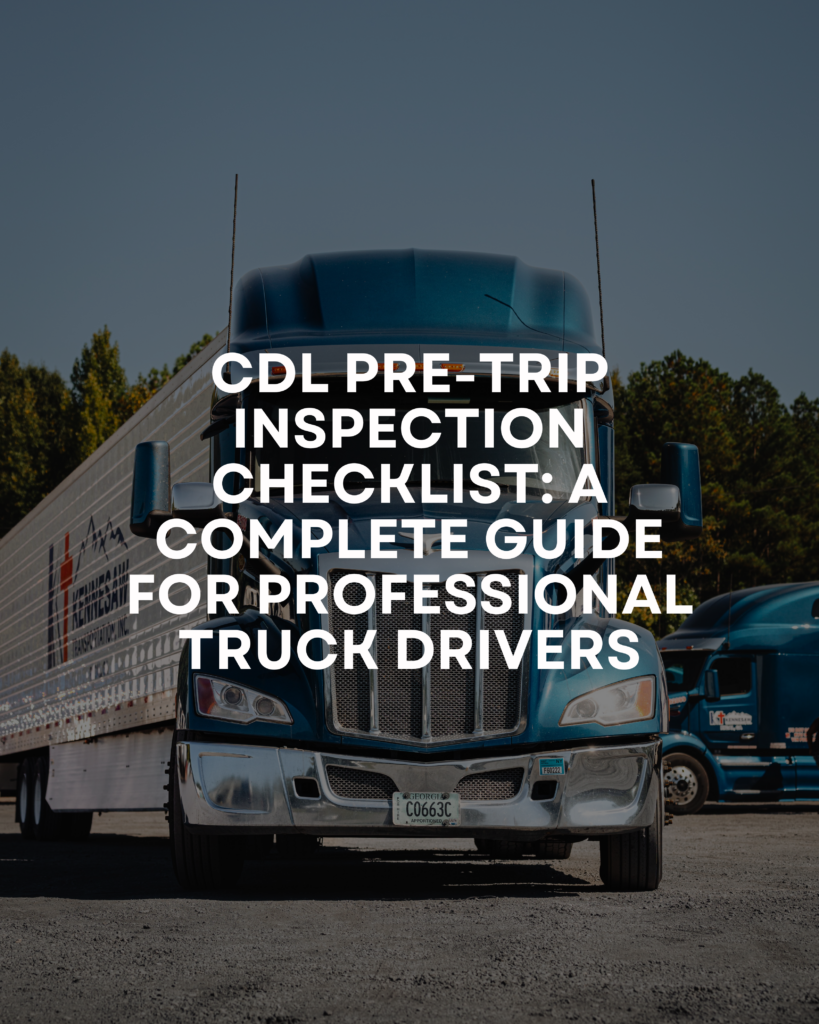
CDL Pre-Trip Inspection Checklist: A Complete Guide for Professional Truck Drivers
Every mile begins with a safe truck.
Whether you’re a new CDL holder preparing for your first trip or an experienced professional driver starting another day on the road, completing a thorough pre-trip inspection is one of the most important responsibilities behind the wheel.
A proper pre-trip inspection helps identify potential issues before they become costly breakdowns, reduces downtime, keeps you compliant with FMCSA regulations, and most importantly, helps protect everyone on the road.
At Kennesaw Transportation, safety has always been a core part of who we are. Here’s a practical CDL pre-trip inspection checklist every driver should follow before hitting the road.
Why Is a Pre-Trip Inspection Important?
A pre-trip inspection isn’t just another task on your to-do list. It helps you:
- Improve safety for yourself and others
- Stay compliant with FMCSA regulations
- Reduce roadside breakdowns
- Catch maintenance issues early
- Protect your CSA score
- Keep freight moving on time
Even a few extra minutes spent inspecting your truck can save hours—or even days—of unexpected downtime.
CDL Pre-Trip Inspection Checklist
1. Engine Compartment
Before starting your day, inspect under the hood for signs of wear or damage.
Check:
- Engine oil level
- Coolant level
- Power steering fluid
- Windshield washer fluid
- Belts and hoses
- Air compressor
- Water pump
- Alternator
- Visible leaks
- Loose or damaged wiring
2. Steering Components
Inspect the steering system for excessive wear or damage.
Look at:
- Steering gearbox
- Pitman arm
- Drag link
- Steering linkage
- Tie rods
- Castle nuts and cotter pins
Everything should be secure, free from cracks, bends, or missing hardware.
3. Suspension System
Your suspension helps maintain control and ride quality.
Inspect:
- Leaf springs
- Spring hangers
- U-bolts
- Shock absorbers
- Air bags (if equipped)
Watch for broken components, leaks, or signs of excessive wear.
4. Brake System
Brakes are one of the most critical parts of any pre-trip inspection.
Check:
- Brake drums or rotors
- Brake pads or shoes
- Brake hoses
- Slack adjusters
- Brake chambers
- Air lines
- Air pressure build-up
- Air leak test
- Low-air warning device
- Parking brake
- Service brake
Never begin a trip if you suspect your braking system isn’t functioning properly.
5. Tires and Wheels
Inspect every tire on both the tractor and trailer.
Check for:
- Proper tread depth
- Correct inflation
- Cuts or bulges
- Uneven wear
- Valve stems
- Lug nuts
- Wheel rims
- Hub oil seals
Look carefully for signs of leaks or damage before leaving the yard.
6. Lights and Electrical System
Make sure all lighting is functioning properly.
Test:
- Headlights
- High beams
- Turn signals
- Brake lights
- Four-way flashers
- Clearance lights
- Marker lights
- Taillights
- License plate light
Replace or report any lights that aren’t working.
7. Coupling System
A secure connection between the tractor and trailer is essential.
Inspect:
- Fifth wheel
- Kingpin
- Locking jaws
- Apron
- Release arm
- Air lines
- Electrical cord
Ensure everything is properly connected and free of damage.
8. Trailer Inspection
Walk the entire trailer.
Inspect:
- Landing gear
- Frame
- Sidewalls
- Roof
- Doors
- Hinges
- Floor
- Reflectors
- Mud flaps
- DOT tape
Look for damage, missing hardware, or anything that could affect safe operation.
9. Emergency Equipment
Verify that required emergency equipment is on board.
Your truck should include:
- Fire extinguisher
- Three reflective warning triangles
- Spare electrical fuses (if required)
10. Final Walk-Around
Before pulling away:
- Check for fluid leaks.
- Ensure cargo is secure.
- Verify trailer doors are latched.
- Remove wheel chocks if used.
- Confirm no obstacles are around the truck.
- Make one final visual inspection before entering traffic.
Safety Starts Before the First Mile
At Kennesaw Transportation, we believe professionalism starts long before the wheels begin turning. Every successful trip begins with a careful pre-trip inspection and a commitment to doing things the right way.
Whether you’re hauling refrigerated freight across the country or heading out on your next regional run, taking a few extra minutes to inspect your equipment helps keep you, your freight, and everyone else on the road safe.
Looking for a company that puts safety first? We’d love to talk with you.
Explore driving opportunities with Kennesaw Transportation and experience the difference that reliable equipment, supportive dispatchers, and a safety-focused culture can make.